Down here in Fedora, South Dakota, we know a thing or two about making things last. Whether it’s a vintage tractor, a sturdy pair of work boots, or the family truck, we take pride in maintenance. But there’s one part of our vehicles that often gets neglected until it starts making a racket: the braking system.
Think of your brakes like your teeth. If you brush and floss regularly, you avoid the painful (and expensive) root canal later. If you ignore a little cavity, well, your wallet is going to feel it. In the world of auto repair, ignoring a squeak today often leads to a full brake replacement tomorrow.
If you’ve been searching for “brake replacement near me” because your car is making a scary sound, or if you just want to make sure you’re not throwing money away, this guide is for you. Here are seven common mistakes drivers make and how you can avoid the high cost of neglect.
1. Turning a Deaf Ear to the “Squeak”
We’ve all been there, driving down Highway 34, windows down, when you hear a faint chirp-chirp-chirp every time you hit the pedal.
The Problem: Most brake pads are designed with a small metal tab called a “wear indicator.” When the pad gets thin, this tab touches the rotor to create a high-pitched squeal. It’s literally your car’s way of saying, “Hey, I’m getting low!”
The Sign: A consistent high-pitched squealing or chirping noise while braking.
The Solution: Don’t turn up the radio to drown it out. Addressing the pads while they still have a little life left means you’re only paying for pads. If you wait until the squeal turns into a “growl,” you’ve likely moved into 5 warning signs your brake system needs immediate attention territory, which involves much more expensive parts.
2. “Riding” the Brakes on Long Declines
South Dakota isn’t exactly the Alps, but we have our fair share of rolling hills and long stretches where it’s tempting to keep your foot lightly on the brake pedal to maintain speed.
The Problem: Keeping constant pressure on the brakes generates massive amounts of heat. Brakes work through friction, turning kinetic energy into heat. If they never get a chance to “breathe,” the pads can “glaze” (becoming smooth and hard), and the rotors can warp. It’s like trying to sand a piece of wood for five miles straight; eventually, the sandpaper catches fire.
The Sign: A burning smell (similar to burnt carpet) or a steering wheel that shakes when you apply the brakes.
The Solution: Use “engine braking.” Shift into a lower gear to let the engine’s compression slow you down, and use “stab braking”: firmly applying the brakes for a few seconds to drop speed, then letting off completely to let them cool down.

3. Treating Brake Fluid Like “Set It and Forget It”
Most folks remember their oil changes (because we remind you!), but brake fluid is often the “forgotten child” of car maintenance.
The Problem: Brake fluid is hygroscopic, which is a fancy way of saying it acts like a sponge for moisture. Over time, water seeps into the lines. Since water boils at a lower temperature than brake fluid and causes rust, old fluid can lead to internal corrosion of your calipers and master cylinder.
The Sign: A “spongy” or soft brake pedal that feels like you’re stepping on a marshmallow.
The Solution: Check your owner’s manual, but generally, you should flush your brake fluid every two years or 30,000 miles. It’s a cheap service that prevents a multi-thousand-dollar overhaul of the entire hydraulic system.
4. The “Pad-Slap” (Replacing Pads But Not Rotors)
When looking for a “brake replacement near me,” you might find some shops offering “budget” pad swaps.
The Problem: Installing brand-new, flat brake pads onto old, grooved, or heat-damaged rotors is a recipe for disaster. It’s like putting brand-new hiking boot soles on a pair of boots that are already falling apart. The new pads won’t seat correctly, leading to poor stopping power and premature wear.
The Sign: New brakes that start squeaking almost immediately or a pedal that feels inconsistent.
The Solution: At Fedora Tire & Oil, we believe in transparent communication. We’ll always measure your rotors. If they’re thick enough, we can “resurface” them to make them flat again. If they’re too thin, they need to be replaced. Doing it right the first time saves you from doing it twice.
5. DIY Disasters: Hanging the Caliper by the Hose
We love a good DIY project, but some mistakes can be dangerous and expensive. One of the most common errors we see from “driveway mechanics” involves the brake caliper.
The Problem: When you take the caliper off to get to the pads, it’s heavy. Some people let it hang by the rubber brake hose. This puts immense strain on the internal structure of the hose, which can cause it to collapse internally or burst later under pressure.
The Sign: One wheel “dragging” (staying hot) or the car pulling to one side when you aren’t even touching the brakes.
The Solution: If you’re working on your own rig, use a bungee cord or a piece of wire to hang the caliper from the suspension. Never let it dangle by its “life support” line!

6. Neglecting the Small Hardware (Slides and Pins)
Your brakes aren’t just pads and discs; they are a complex assembly of moving parts that need to slide back and forth freely.
The Problem: In our South Dakota climate, road salt and dust love to get into the caliper slide pins. If these pins get stuck, the brake pad will stay pressed against the rotor even when you let off the pedal. This causes one pad to wear out in weeks while the other stays brand new.
The Sign: Uneven wear between the inner and outer pads, or a vehicle that pulls to one side during braking.
The Solution: Every time the brakes are serviced, the pins should be cleaned and lubricated with high-temperature silicone grease. It takes five extra minutes but can double the life of your pads.
7. Waiting for the “Grind” to Save Money
This is the biggest mistake of all. Many drivers think, “I’ll wait until they really start grinding so I get my money’s worth out of these pads.”
The Problem: By the time you hear a “metal-on-metal” grinding sound, the friction material is gone. You are now pressing a steel plate against a cast-iron rotor. This creates extreme heat and sends metal shards throughout your wheel assembly. What could have been a $150 pad job is now a $600+ “everything” job.
The Sign: A loud, harsh grinding sound that you can feel through the floorboards.
The Solution: Be proactive. A simple visual inspection during your regular oil change can catch thin pads long before they destroy your rotors.
How to Perform a “Neighborhood Inspection” at Home
You don’t need to be a Master Technician to keep an eye on your safety. Here are three things you can do in your own driveway in Fedora:
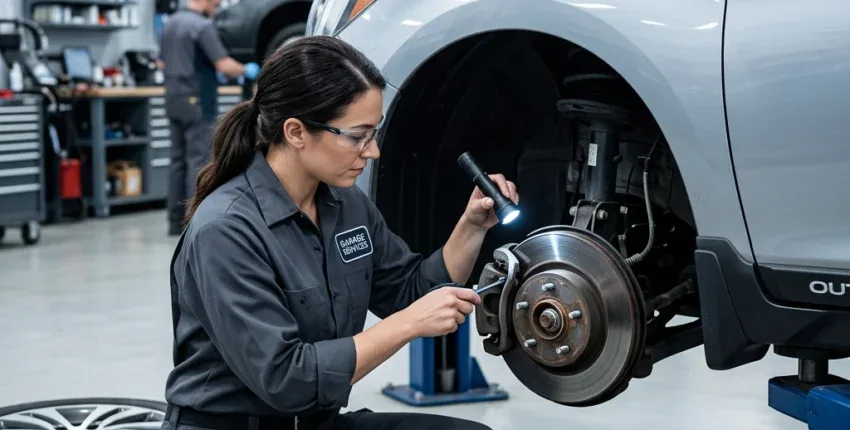
- The Flashlight Test: Most modern wheels have gaps big enough to see through. Take a flashlight and look at the “sandwich” of the brake assembly. You’ll see the shiny rotor, then the brake pad. If that pad looks thinner than a stack of three pennies, it’s time to visit us.
- The Brake Fluid Peek: Pop your hood and find the translucent reservoir (usually near the back of the engine on the driver’s side). The fluid should be a light golden honey color. If it looks like dark coffee or maple syrup, it’s contaminated with moisture and needs a flush.
- The “Hands-Off” Test: On a safe, flat, empty road, briefly let go of the steering wheel and apply the brakes firmly. Does the car stay straight? If it yanks to the left or right, you’ve got a caliper or alignment issue. (Read more on why your car might be pulling here).

Your Partners in Safety at Fedora Tire & Oil
We know that automotive repairs can feel like a headache, but they don’t have to be. At Fedora Tire & Oil, we treat every car like it’s carrying our own family. We’re not here to upsell you on things you don’t need; we’re here to make sure your vehicle stops when you need it to: every single time.
Whether it’s a simple wheel alignment to keep your tires wearing evenly or a full automotive repair service, we focus on transparent communication and neighborly service.
Don’t wait for the “grind” to turn a small fix into a big expense. If you’ve been looking for reliable brake replacement near me, come see us. Let’s keep your car: and your family: safe on the South Dakota roads.
Ready for a check-up? Contact us today to schedule a brake inspection!